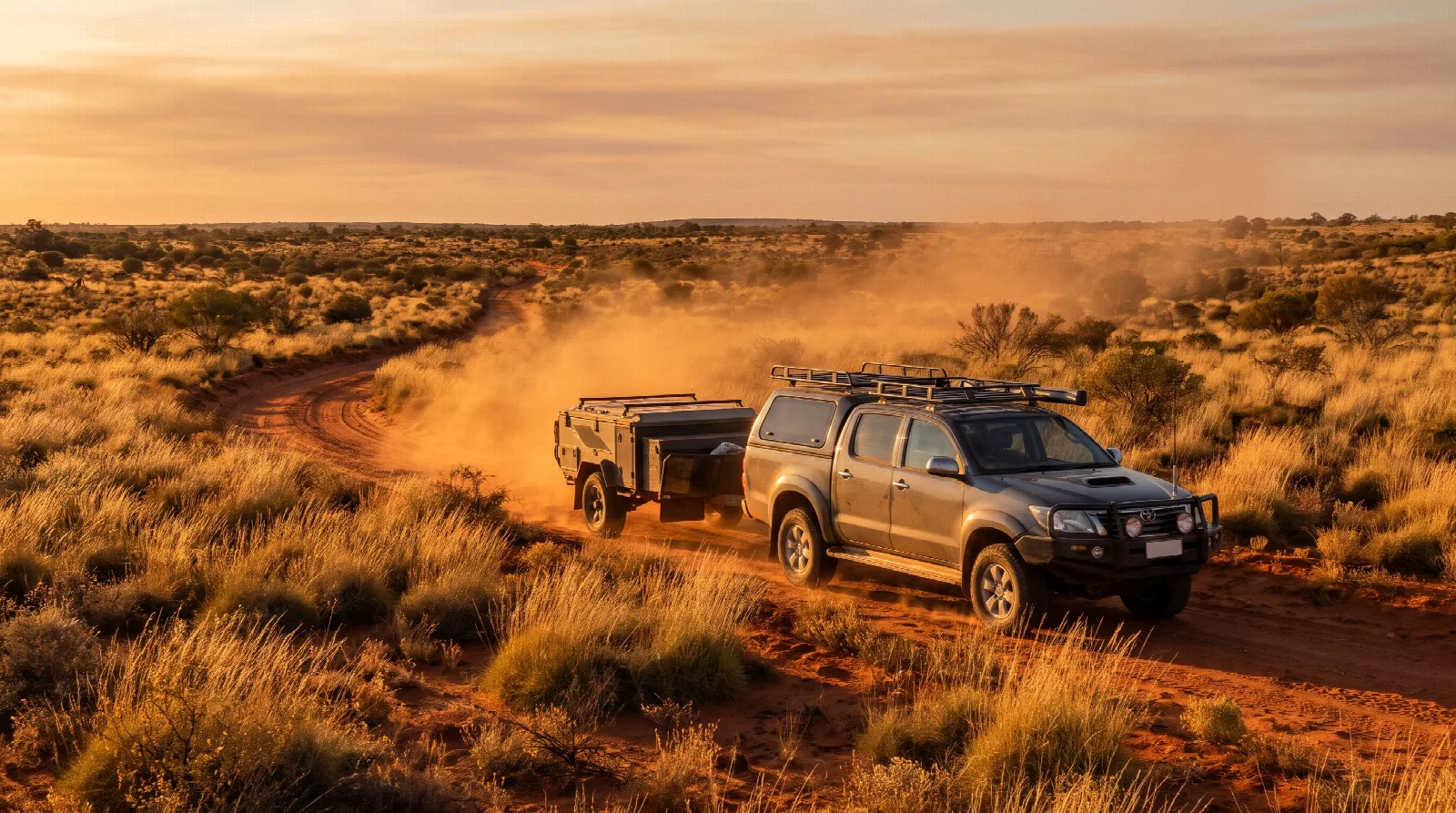

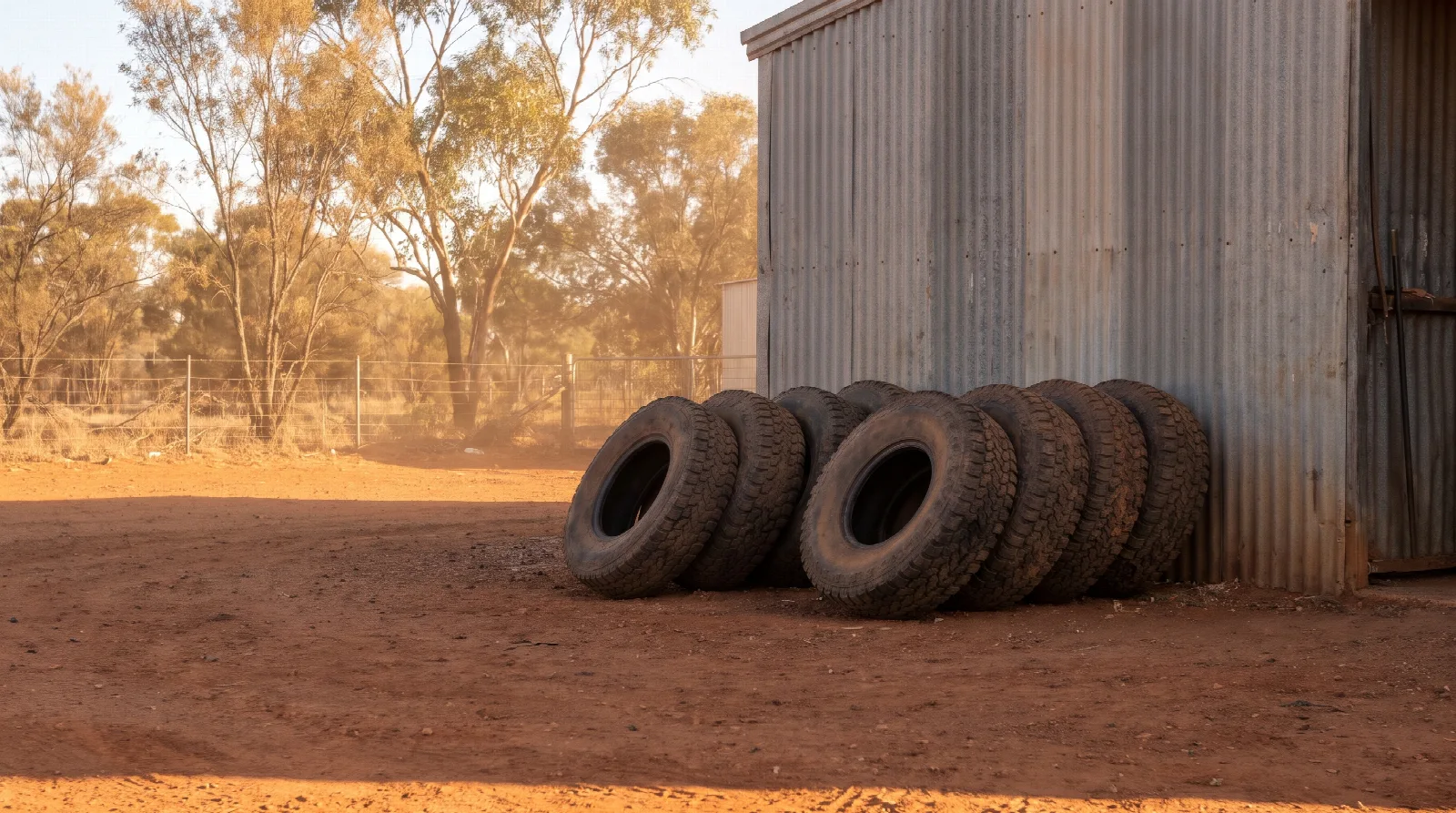
A federal parliamentary committee handed down its report on the Australian tyre industry in October 2026, with 12 recommendations covering how replacement tyres are regulated and how used tyres are managed. Nothing has changed for 4WD owners yet: these are recommendations to government, not new law, so the tyres you can buy and fit today are unaffected.
It is still worth knowing what was proposed. If the recommendations are taken up, they could shape how replacement tyres are judged in this country and how the old ones are dealt with once they come off your ute.
What the inquiry looked at
The inquiry was run by a House of Representatives committee covering industry, innovation and science. It started out focused on the tyre industry's place in the circular economy, which is a formal way of asking what happens to a tyre at the end of its life and whether the material gets used again.
Two themes came through in the final report:
- Replacement tyre standards. The committee recommended a closer look at how replacement tyres are regulated.
- Used tyres. It recommended a nationally consistent approach, an independent audit of the current voluntary recycling scheme, and consideration of a mandatory national scheme.
Why replacement tyres came up
The Australian Design Rules are the national standards a vehicle has to meet when it is first supplied to the market. Their tyre requirements centre on what a new vehicle leaves the dealership wearing. Once that first set wears out, you are in the replacement market, and that is the part of the system the committee wants reviewed.
Reporting on the inquiry points to quality and durability as the likely focus of any change. Europe gives some context. Tyres sold there carry a label grading wet grip, rolling resistance and noise, and regulators are working towards limits on tyre wear. Australia does not require an equivalent label.
For a 4WD owner, the practical point is simple. Any future standard would be a floor, not a recommendation for your particular vehicle. A tyre can be perfectly legal and still be the wrong choice for a loaded dual-cab on corrugations, which is why the checks further down matter whatever the government decides.
The used tyre numbers behind the report
Australia generates about 537,000 tonnes of end-of-life tyres a year. Industry analysis puts the share that is reused at around 9 per cent and the share recycled at around 17 per cent. Roughly 40 per cent is exported for energy recovery. The rest is landfilled, buried on site at mines, stockpiled or illegally dumped.
Mining is a big part of that picture, with about 100,000 tonnes of off-the-road tyres buried on site each year. The scheme that covers tyre recycling today is voluntary, and a large share of imported tyres sit outside its levy. That gap is the main argument being made for a mandatory scheme.
What could change, and what won't
Here is a fair reading of where things stand:
- Nothing is law yet. The government still has to respond, and any change to standards would take time to design and bring in.
- Your current tyres stay legal. A recommendation about future regulation doesn't affect what is already on your vehicle.
- Roadworthy rules are unchanged. Your state's requirements on tread depth, condition and vehicle modifications still apply exactly as before.
- Disposal may get more attention. If a mandatory recycling scheme goes ahead, expect more scrutiny of how old tyres are collected. Exactly how it would work, and what it would cost businesses, has not been settled.
What to check before you buy 4WD tyres
None of this needs to wait for Canberra. The best protection is still matching the tyre to the vehicle and the work it does.
Load index and speed rating
Start with your tyre placard, usually on the driver's door jamb. Replacement tyres need to meet the load and speed requirements shown there. If you tow, carry a canopy, or run a heavy tray and drawers, think about your real working weight as well as the minimum. Our article on load ratings for heavier utes goes through it in more detail.
Construction
An LT tyre is built for heavier loads and rougher use than a passenger-construction tyre of a similar size. If your 4WD does regular dirt road work, check the construction and not only the tread pattern. Don't assume two tyres in the same size carry the same load.
Terrain type
Be honest about where the kilometres are. A mostly sealed-road ute with occasional gravel usually suits an A/T. In a popular size like 265/65R17, options include the WildTraxx A/T from Landspider and the Argos AT08 from Roadking. If you spend more time on rocky tracks and want a tougher look and bite, a rugged-terrain pattern such as the Warrior RT from Lanvigator sits between an A/T and a full M/T, usually with more road noise than an A/T. Our tyre guide explains how the terrain types compare.
Size changes
Moving away from the placard size can affect speedometer accuracy, clearance and compliance, and the rules differ between states. Check your state's modification rules before changing size, and get advice from whoever is fitting them.
Fitting and the old set
A local workshop or mobile fitter near you can fit your new tyres and balance them. You can search for one on our find a fitter page. While you are booking, ask what happens to your old tyres. A business that uses a licensed collector will be able to tell you straight away.
What to watch next
The next step belongs to the federal government, which still has to respond to the report. The two things to watch are any move to review replacement tyre standards and any decision on a mandatory recycling scheme. We will cover it here if the rules change in a way that affects what you fit to your 4WD.
Common questions
Are any 4WD tyres being banned?
No. The committee made recommendations only. No tyre has been banned as a result of the inquiry, and nothing you can buy today has been made illegal by it.
Will tyres cost more because of this?
Nobody can say yet. A mandatory recycling scheme or new standards could add costs somewhere in the chain, but no scheme design has been announced, so any figure would be a guess.
Does Australia use the European tyre label?
Australia does not require it. Some tyres sold here have European label grades because they are also sold in Europe, and where we hold those grades they appear on the tyre's listing.
What should I do right now?
Check your placard, match the load and speed rating, choose the terrain type you really need, and replace tyres when tread depth or condition calls for it. None of that depends on the outcome of the inquiry.