
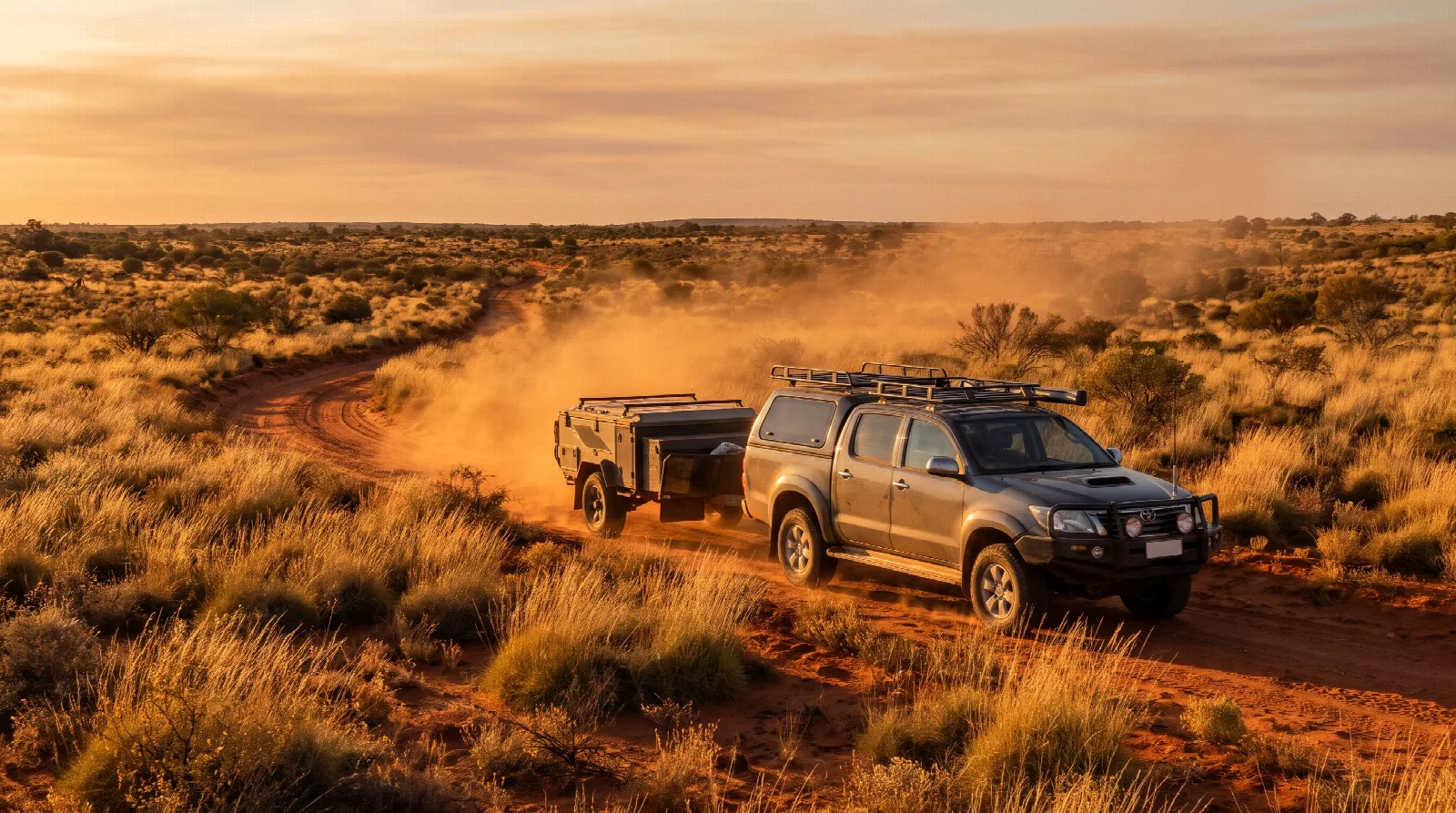
Australia's ute market is getting heavier. Plug-in hybrid utes such as the BYD Shark 6 and the Ford Ranger PHEV carry big battery packs that push their kerb weight well past the diesel utes most of us grew up with, and that changes what a safe replacement tyre looks like.
If you drive one of these new utes, or any dual-cab that spends its life loaded with gear, a canopy and a camper on the hitch, the load rating stamped on your tyres matters more than ever. Here is what the shift means and how to choose tyres that can carry the weight.
Why the new utes weigh more
A plug-in hybrid ute pairs a petrol engine with electric motors and a sizeable battery. That battery has to live somewhere, usually under the floor or the tub, and it adds a lot of mass before you have loaded a single swag. The Shark 6 is listed at roughly 2.7 tonnes at the kerb, and the Ranger PHEV is several hundred kilograms heavier than its diesel siblings.
Both utes share a gross vehicle mass (GVM) of 3,500 kg. GVM is the most the vehicle can weigh when fully loaded, and payload is simply GVM minus kerb weight. A heavier starting point means less room for people, accessories and towball load, and it means the tyres are already working harder on the morning commute than they would on a lighter ute.
It is not only plug-in hybrids. The steady arrival of new ute brands and the popularity of bigger wheels, bull bars, long-range tanks and drawer systems all point in the same direction: heavier vehicles sitting on tyres that need to cope.
What a load index actually tells you
Every tyre carries a service description after the size, such as 265/65R17 112T. The number is the load index and the letter is the speed rating. The load index is a code for the maximum weight a single tyre can carry at its specified pressure. A 112 is rated for 1,120 kg per tyre, and a 114 for 1,180 kg.
Australian rules require replacement tyres to have a load index at least equal to the figure on your vehicle's tyre placard, usually found on the driver's door jamb. That is the legal floor, not the ideal. If your ute regularly runs near its GVM, tows close to its limit or carries a heavy fit-out, a higher load index gives you a buffer for heat, rough roads and the odd overloaded weekend.
- Check the placard first: it lists the original tyre size, the minimum load index and the speed rating.
- Match or exceed it: never fit a tyre with a lower load index than the placard figure.
- Think about the real load: a ute that lives at its limit benefits from more headroom than the minimum.
LT construction versus passenger construction
Many 4WD tyres come in two forms in the same size: a passenger-type tyre and a light truck tyre with LT in front of the size. LT tyres are built with stronger casings and more robust sidewalls, and they are designed to run at higher pressures to carry more weight.
That extra strength pays off when the ute is heavy. A stiffer carcass resists the flex and heat that build up under load on long highway runs, and a tougher sidewall shrugs off the sharp rocks and stakes you meet on corrugated tracks. The trade-off is a firmer ride when the ute is empty, which most owners of heavy utes happily accept.
| How you use the ute | What to look for |
|---|---|
| Mostly city and highway, light loads | Placard load index or better, passenger or LT construction |
| Regular towing or touring near GVM | LT construction with a load index above the placard minimum |
| Heavy fit-out plus remote tracks | LT all-terrain or rugged-terrain with strong sidewalls |
Tyres that suit a heavier ute
If your ute runs 17-inch or 18-inch wheels, there are LT options in stock that are built for exactly this kind of work. A few worth a look:
- Sabin Pearlman Baja Good AT in LT265/65R17: an all-terrain in LT construction for loaded touring and towing.
- Ninevont Fighter PT-Z20 in LT265/65R17: another LT all-terrain for owners who split their time between bitumen and dirt.
- Eagleblade J35 A/T in LT265/65R18: an 18-inch LT all-terrain, a popular wheel size on late-model utes.
- Lanvigator Warrior RT in LT265/65R18: a rugged-terrain pattern for heavier off-road use where sidewall strength counts.
You can browse the full range by brand, for example Sabin Pearlman, Eagleblade or Lanvigator, or search by your size. If you are not sure which pattern suits you, our all-terrain tyres are the usual starting point for a ute that does a bit of everything.
Pressure, heat and the heavier ute
Load index ratings assume the tyre is inflated correctly. Run a heavy ute on low pressures and the sidewalls flex more, the tyre heats up and the load it can safely carry drops. On a hot Australian highway with a full tub, that is how tyres fail.
- Use the placard pressures as your base and follow the loaded figure when you are carrying weight or towing.
- LT tyres often need higher pressures than passenger tyres to carry the same load, so ask your fitter for the right figure for the tyre you choose.
- Check pressures cold, before you drive, and reinflate after airing down for sand or tracks.
- Weigh the ute fully loaded at a public weighbridge at least once, so you know how close you are to GVM and each axle limit.
Our tyre guide walks through reading a sidewall and the basics of load and speed ratings if you want a refresher.
Upgrading size? Keep the load rating in mind
Bigger wheels and taller tyres are part of the look for many new utes, and a size change is often perfectly legitimate. The catch is that a different size can come with a different load index. Before you change size, confirm the new tyre still meets or exceeds the placard load index, stays within the diameter limits your state allows, and clears the suspension and guards at full lock and full compression.
When you are ready, a local workshop or mobile fitter near you can fit and balance the new set and check your pressures for the load you carry. Use find a fitter to see who services your postcode.
Common questions
Do plug-in hybrid utes need special tyres?
Not a special category, but they need tyres with enough load capacity for their extra weight. Start with the placard load index and consider LT construction if you tow or tour loaded.
Can I fit a tyre with a lower load index than my placard?
No. Replacement tyres must have a load index at least equal to the placard figure. Going lower can make the vehicle unroadworthy and puts the tyres at risk of overheating.
Are LT tyres harsher on the road?
They are usually firmer, especially when the ute is empty, because the casing is stiffer and runs at higher pressure. For a heavy ute that tows or tours, most owners find the extra strength worth it.
How do I know how heavy my ute really is?
Take it to a public weighbridge loaded as you would travel. Compare the result with the GVM and axle limits in your owner's manual.