
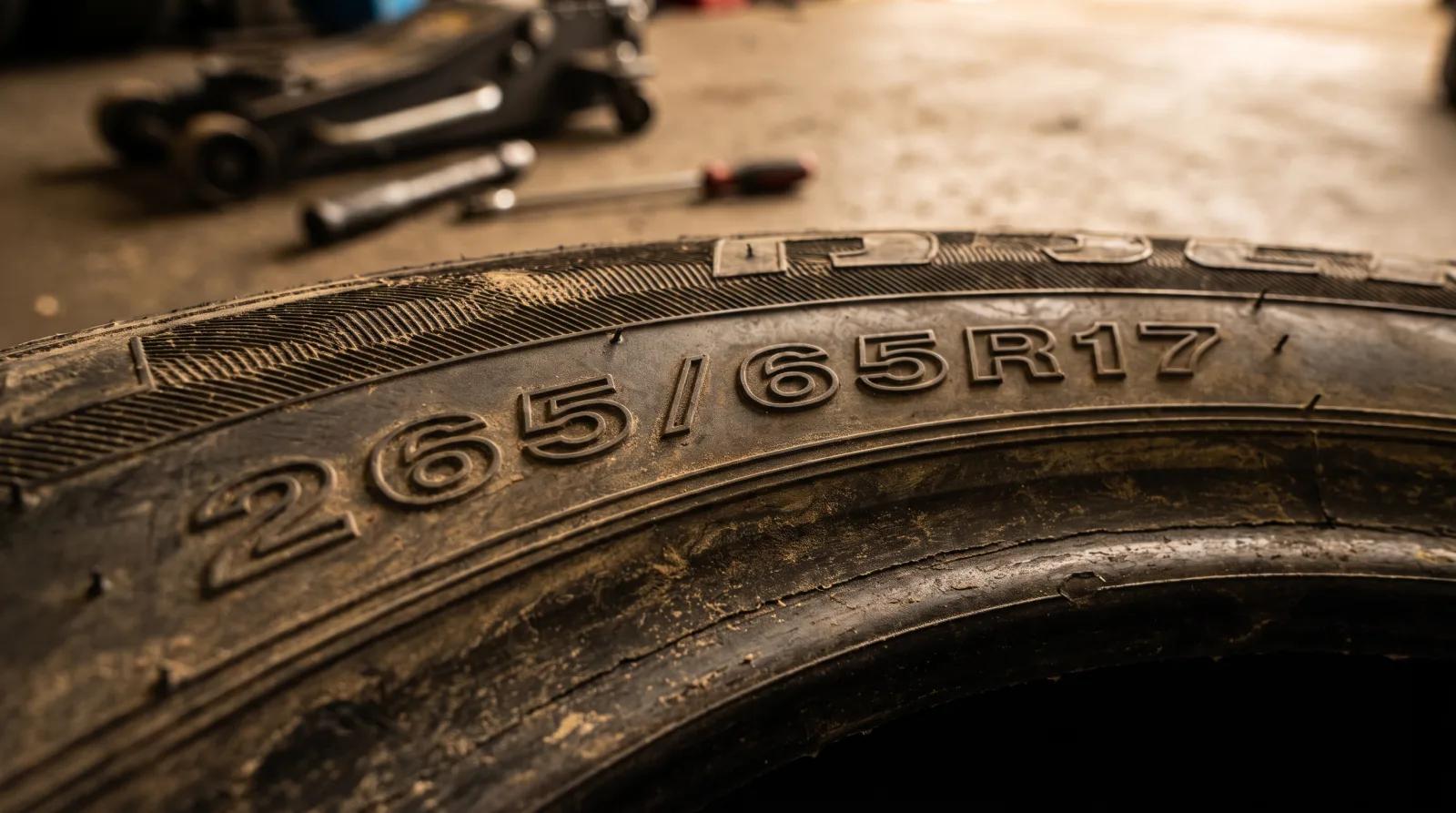
Every tyre sidewall carries a size code, and once you know how to read it you can confirm a tyre is right for your vehicle in seconds. Take this example — a common size for many mid-size 4WDs and utes:
265/65R17 112S
Reading it left to right:
- 265 — the section width in millimetres, measured sidewall to sidewall.
- 65 — the aspect ratio (profile), the sidewall height as a percentage of the section width. A lower number means a shorter, stiffer sidewall.
- R — the construction type. R means radial, the standard construction on virtually every tyre sold today.
- 17 — the rim diameter in inches. The tyre must match your wheel's rim diameter exactly.
- 112 — the load index, the maximum weight this tyre can carry.
- S — the speed rating, the maximum sustained speed this tyre is rated for.
Load index and speed rating, at a glance
These codes are industry-standard, not brand specific — a load index of 112 means the same maximum weight on any tyre from any manufacturer.
| Load index | Max load per tyre |
|---|---|
| 100 | 800 kg |
| 104 | 900 kg |
| 108 | 1,000 kg |
| 112 | 1,120 kg |
| 116 | 1,250 kg |
| 120 | 1,400 kg |
| Speed symbol | Max sustained speed |
|---|---|
| Q | 160 km/h |
| R | 170 km/h |
| S | 180 km/h |
| T | 190 km/h |
| H | 210 km/h |
The rule that matters: never fit a tyre with a load index or speed rating below what's specified on your vehicle's tyre placard (usually on the driver's door jamb, the glovebox, or the fuel filler flap). Fitting a higher-rated tyre is fine; fitting a lower-rated one isn't.
Where to find your current size
You'll find your current tyre's size printed on its sidewall, and your vehicle's compliant tyre size(s) on the placard. If you'd like a longer walkthrough — including terrain types and load/speed ratings in full — see our Tyre Guide. Once you know your size, you can find matching stock on our full tyre range.